Iran war cost will be passed to consumers, shipping giant boss
Reports about the conflict involving Iran, Israel, and the United States have raised concerns across global shipping networks. The core message is straightforward: when major sea routes become unsafe, restricted, or slower to use, transport costs rise. Large carriers may add surcharges, reroute vessels, or accept longer transit times, and those extra costs can move through the supply chain until they are reflected in consumer prices.
For parcel recipients, importers, and online shoppers, the practical effect is usually not a single dramatic tracking update, but a combination of delays, revised delivery estimates, and occasional disruptions at ports or transfer hubs. Statements from major shipping executives, including Maersk CEO Vincent Clerc as reported by news outlets, have pointed to that broader pattern: higher logistics costs are unlikely to stay only with the carrier.
Why conflict in the Middle East affects shipping worldwide
The Middle East sits beside some of the world’s most important maritime corridors. When tensions escalate, shipping companies, cargo owners, insurers, and port operators all have to reassess risk. Even if a parcel is not going directly to the region, global shipping capacity is interconnected, so disruption in one area can affect schedules elsewhere.
Strait of Hormuz
The Strait of Hormuz is one of the most important routes for oil and other trade flows. If traffic is reduced, delayed, or perceived as unsafe, the effect can spread quickly into fuel markets and transport costs. Higher energy prices can then increase the cost of moving cargo by sea, road, rail, and air.
In practical terms, any disruption here can create:
- Higher bunker fuel and operating costs for carriers
- Schedule changes for vessels serving nearby ports
- Congestion as ships wait for safer transit windows or revised instructions
- Secondary cost increases for businesses that depend on imported goods
Red Sea and Suez-linked routes
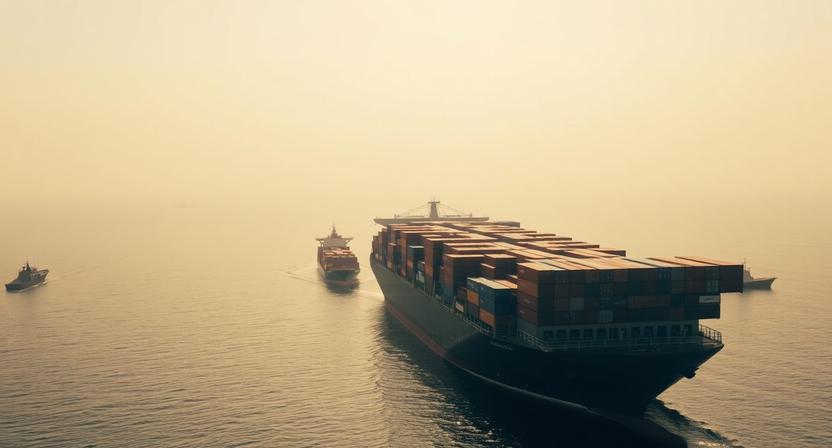
Security threats in the Red Sea have already led many vessels to avoid the normal passage and reroute around the Cape of Good Hope. That diversion adds distance, time, fuel use, and pressure on vessel availability. When a voyage takes longer, the ship is tied up for longer as well, reducing network efficiency.
That matters because carriers do not only face one extra cost. They may also face:
- Additional crew and fuel expenses
- Revised port rotations
- Container imbalances between export and import regions
- Knock-on delays to connecting services
How higher freight costs reach consumers
When shipping becomes more expensive, businesses have several options: absorb the cost, reduce margins, delay shipments, or increase prices. Over time, many companies pass at least part of the added expense to wholesalers, retailers, and ultimately consumers.
Reported figures in coverage of the current crisis have included increases of roughly $200 per 20-foot container and freight increases in the range of 15% to 20% on some routes. Actual charges vary by lane, cargo type, contract terms, security conditions, and how long disruption continues. The main point is that even modest increases at the container level can have a wider retail effect when multiplied across high-volume supply chains.
Why one route problem affects many products
Consumers sometimes assume only oil or goods sourced from the Middle East will be affected. In reality, disruptions can spread much more broadly. A vessel diverted from one region may arrive late for its next assignment in another. Containers may miss planned transfers. Port queues can lengthen. As a result, products unrelated to the original conflict zone can still face delays or cost pressure.
- Imported household goods may arrive later than expected
- Retailers may revise stock planning
- Seasonal inventory can become less predictable
- Replacement parts and industrial inputs may take longer to reach factories
What this may look like in tracking updates
Parcel tracking usually reflects logistics consequences rather than the geopolitical cause. A shipment delayed by maritime disruption may show routine status messages rather than a detailed explanation.
Common tracking statuses you might see
- In transit — The shipment is still moving through the network, but the route may be slower than normal.
- Delayed — The carrier has identified a disruption affecting the expected timeline.
- Operational delay — A broad logistics issue, such as rerouting, congestion, or capacity constraints, is affecting movement.
- Held at port or awaiting onward transport — Cargo may be waiting for vessel space, customs processing, or revised routing.
- Arrival at transshipment hub — The shipment has reached an intermediate location but may need to wait longer for its next connection.
- Exception — A non-standard event has affected the shipment. This does not automatically mean the parcel is lost.
What usually happens next
In many cases, the next step is simply rerouting or waiting for onward capacity. If the shipment is containerized sea freight, updates may remain unchanged for longer periods than domestic parcel users expect. Ocean tracking is often less granular than express courier tracking.
Realistic expectations include:
- Longer gaps between tracking scans
- Estimated delivery dates changing more than once
- Possible congestion at destination ports after the vessel arrives
- Further delay if customs and inland transport are also under pressure
Effects on supply chains and essential goods
Shipping disruption does not affect every product equally. Essential goods often receive priority, while lower-priority cargo may wait longer for available capacity. Businesses may also shift goods by truck, rail, or air where possible, but those alternatives generally cannot replace maritime volumes at scale.
This creates several risks:
- Food supply pressure where imports are heavily relied upon
- Perishable cargo challenges if delays affect cold-chain timing
- Factory interruptions if raw materials or components arrive late
- Backlogs when delayed ships eventually reach already busy ports
For consumers, these issues may show up as slower replenishment of imported products, reduced availability of some items, or price increases that appear weeks after the original shipping disruption.
Why governments and carriers are reacting
When freight rates and transport charges rise quickly, governments often look at the broader economic impact. Increased logistics costs can affect inflation, export competitiveness, and retail availability. Carriers, meanwhile, must balance crew safety, vessel security, insurance exposure, and service reliability.
News reports have said that rival lines have also increased charges and that officials in some countries have sought explanations from shipping executives. That kind of response is common when transport disruption starts affecting national supply chains or consumer prices.
Possible responses and their limits
Security measures at sea
Military escorts and naval protection are sometimes proposed to keep trade moving through high-risk waters. These steps may reduce some immediate danger, but they do not remove all operational risk. Narrow waterways, shifting security conditions, and insurer caution can still lead carriers to reroute or limit service.
Even when a route remains technically open, carriers may decide that the operational and security risk is still too high for normal service patterns.
Rerouting around risk zones
Rerouting is often the most immediate practical response. It can preserve service continuity, but usually at the cost of longer transit times and higher expenses. For customers, this means delays are not always a sign of failure; they may reflect an attempt to avoid a more serious disruption.
Political resolution
In the longer term, the most effective solution is usually de-escalation and restored freedom of navigation. Shipping networks work best when carriers can plan predictable schedules through stable trade corridors. Without that, temporary workarounds tend to remain more expensive and less reliable.
What consumers should realistically expect
If the conflict continues to affect major shipping lanes, consumers should be prepared for a mix of higher costs and longer delivery times for some imported goods. Not every order will be affected, and not every price increase can be traced to one event, but maritime disruption often feeds gradually into retail conditions.
Reasonable expectations for parcels and imported goods
| Situation | Likely effect | What to expect next |
|---|---|---|
| Vessel rerouted around a risk area | Longer transit time | Tracking may stay unchanged for several days before the next scan |
| Port congestion after delayed arrivals | Slower unloading and transfer | Estimated delivery date may be revised |
| Carrier adds extra transport charges | Higher import and retail costs | Businesses may adjust prices over time |
| Priority given to essential goods | Non-essential shipments wait longer | Lower-priority cargo may face additional handling delays |
What to do if your shipment is affected
If you are waiting for a parcel or freight shipment linked to international sea transport, the most useful steps are usually practical rather than urgent.
- Check the latest carrier tracking scan and note the date of the last update.
- Look for a carrier service alert on the official website.
- Allow extra time before assuming the item is lost, especially for sea freight or economy imports.
- Contact the seller or shipper if the estimated delivery window has clearly passed.
- Ask whether the shipment was rerouted or is waiting at a port or transfer hub.
For most customers, the realistic takeaway is simple: conflict near major maritime chokepoints can slow global trade, raise shipping costs, and eventually affect retail prices. Tracking updates may remain limited, but the pattern behind them is usually the same: longer, more expensive, and less predictable movement through the network until conditions stabilize.